
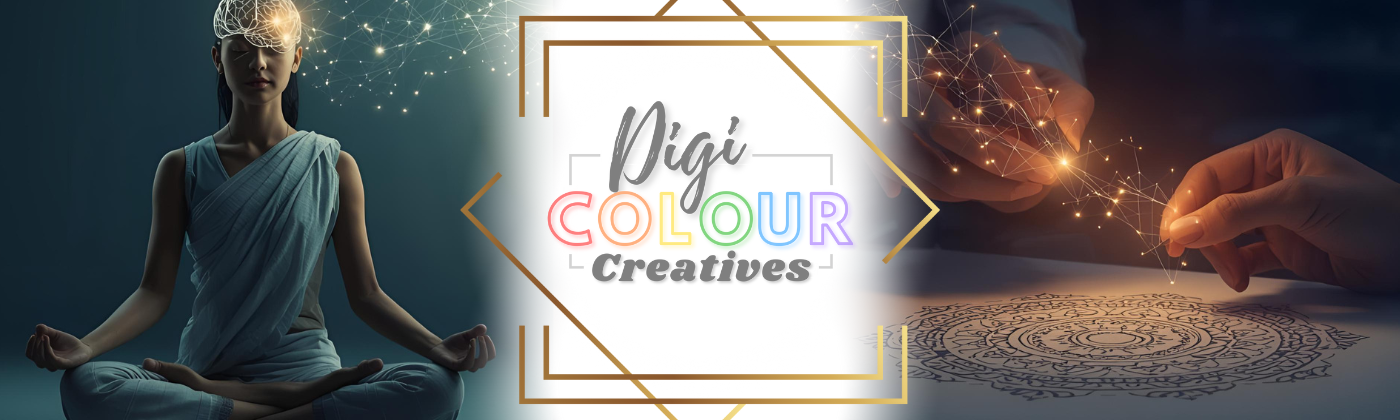
In the quest for peace and mental clarity in our hectic modern world, two practices have risen to the forefront: the ancient discipline of meditation and the rediscovered pastime of adult coloring. Both are frequently touted as premier methods for reducing stress and cultivating mindfulness. But how do they truly compare? Is one more effective than the other?
The answer isn’t a simple declaration of a winner. Instead, it’s about understanding the different pathways each activity takes to achieve a similar goal: calming the nervous system. This article will break down the science, benefits, and unique advantages of both coloring and meditation to help you decide which practice—or which combination—best serves your needs.
The Contender: Meditation
Meditation is the practice of training your mind to focus and redirect your thoughts. The most common form for beginners is mindfulness meditation, which involves focusing on your breath and observing thoughts without judgment.
How It Fights Stress:
Meditation works by directly targeting the brain’s default mode network (DMN), which is active when we’re lost in self-referential thoughts—worrying about the future, ruminating on the past, and often contributing to anxiety and stress. Regular meditation has been shown to:
- Reduce activity in the amygdala: This is the brain’s fear center, responsible for the “fight-or-flight” response. Studies show meditation can literally shrink the amygdala, leading to a less reactive stress response.
- Thicken the prefrontal cortex: This area is associated with higher-order brain functions like awareness, concentration, and decision-making, making you more resilient to stress.
- Induce the relaxation response: It lowers heart rate, blood pressure, and cortisol levels, counteracting the body’s physiological stress state.
The Challenge:
For many, the practice of “sitting with your thoughts” can be incredibly difficult. Beginners often report frustration, boredom, and a feeling of failure when their mind wanders, which it naturally will. This initial barrier can prevent people from experiencing its long-term benefits.
The Challenger: Coloring
Coloring, particularly of intricate patterns like mandalas, is often called “active meditation.” It doesn’t ask you to clear your mind; instead, it gives your mind a single, simple point of focus.
How It Fights Stress:
Coloring induces a state of “flow,” a concept coined by psychologist Mihály Csíkszentmihályi. Flow is a state of complete immersion in an activity where time seems to fall away.
- Occupies the DMN: Just like meditation, the focused attention required for coloring quietens the default mode network. It gives your brain a break from its anxious chatter by providing a tangible task.
- Low-Stakes Engagement: The structure is provided (the lines on the page), which reduces the anxiety of a blank canvas. There’s no pressure to “perform” or “get it right,” making it accessible and low-pressure.
- Tactile Grounding: The physical act of coloring—the feel of the pencil on paper, the sight of colors filling a space—acts as a grounding technique, pulling you firmly into the present moment. Research, including a notable study published in the Art Therapy: Journal of the American Art Therapy Association, has shown that coloring complex geometric patterns can significantly reduce anxiety levels.
Head-to-Head: Key Comparisons
| Feature | Meditation | Coloring |
|---|---|---|
| Path to Focus | Internal (breath, body scan, mantra) | External (page, colors, patterns) |
| Learning Curve | Can be steep; requires practice to overcome frustration | Very low; intuitive and immediately engaging |
| Cognitive Load | High initial effort to quiet the mind | Low effort; the pattern guides focus automatically |
| Accessibility | Can be done anywhere, anytime with no tools | Requires materials (book, pencils) |
| Primary Benefit | Long-term rewiring of brain structure, profound self-awareness | Short-term stress relief, mental distraction, creative expression |
The Verdict: It’s Not a Competition
The question isn’t which is better, but which is better for you, or for a given situation.
- Choose Meditation if: You are committed to long-term brain training, want to develop deeper self-awareness, and are willing to work through the initial challenges to build a powerful, tool-free resilience practice.
- Choose Coloring if: You need an accessible, enjoyable, and quick way to unwind after a stressful day. It’s perfect for those who find traditional meditation frustrating or for anyone looking for a creative, screen-free way to disconnect and decompress.
The Best of Both Worlds: A Combined Practice
You don’t have to choose. Many find the most powerful routine involves both.
- Use Coloring as a “Gateway” Practice: If meditation feels too daunting, start with 10-15 minutes of coloring to calm your mind and transition into a more focused state. Then, try a short 5-minute meditation session.
- Practice Mindful Coloring: Elevate your coloring session into a meditative act. Before you start, set an intention. As you color, pay full attention to the sensations: the sound of the pencil on paper, the blend of colors, the movement of your hand. When your mind wanders, gently bring it back to the act of coloring, just as you would bring it back to your breath in meditation.
Conclusion: Two Paths, One Destination
Both meditation and coloring are highly effective tools for managing stress and cultivating mindfulness. Meditation is like going to the gym for your brain—it’s hard work that builds fundamental strength. Coloring is like a relaxing walk—it’s gentle, enjoyable, and still incredibly beneficial.
The “most effective” practice is the one you will actually do consistently. For some, that’s the disciplined silence of meditation. For others, it’s the joyful, colorful journey of filling in a page. Ultimately, both paths lead to the same peaceful destination: a quieter, calmer mind.
Leave a Reply